
Drawing & Painting Sea Turtles
Before the digital transition in my picture book studio, I used pencil, paper, various art supplies, and reference books from the library. After moving to Florida in the late 80s, the drama of massive female sea turtles crawling onto the state’s beaches to lay eggs inspired me to write and illustrate one of my children’s books. It turned out I could join a park ranger for a nocturnal walk on the beach and see this ancient ritual for myself.
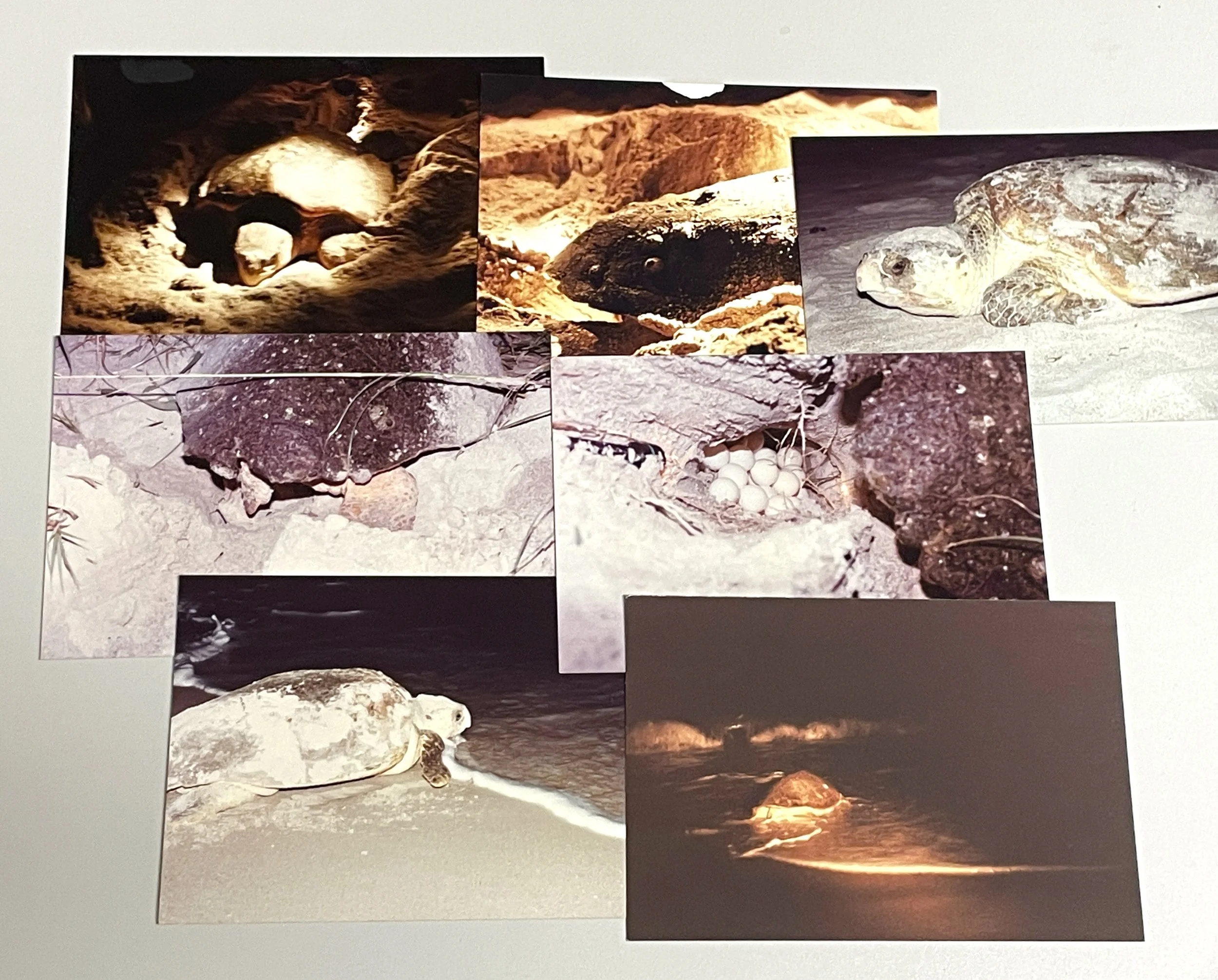
These are few of the photographs of a nesting female I took at Sebastian Inlet State Park, which still has a turtle walk program. She was a loggerhead turtle, one of the seven species of sea turtles. These days, flash photography is no longer permitted.
With reference photos in hand, a big question was how to render the illustrations. I tried colored pencils first, but they’re too inflexible for me. (Where’s the Command-Z?)
The art supply store where I found Neocolor ll Aquarelle pastels is lost in the mists of time, but paired with Canson’s Mi-Teintes paper, the water-soluble pastels proved to be ideal to render gritty sand, sparkling water, scutes, and scales. More info about these art supplies can be found on my Supply List page and in this blog post.
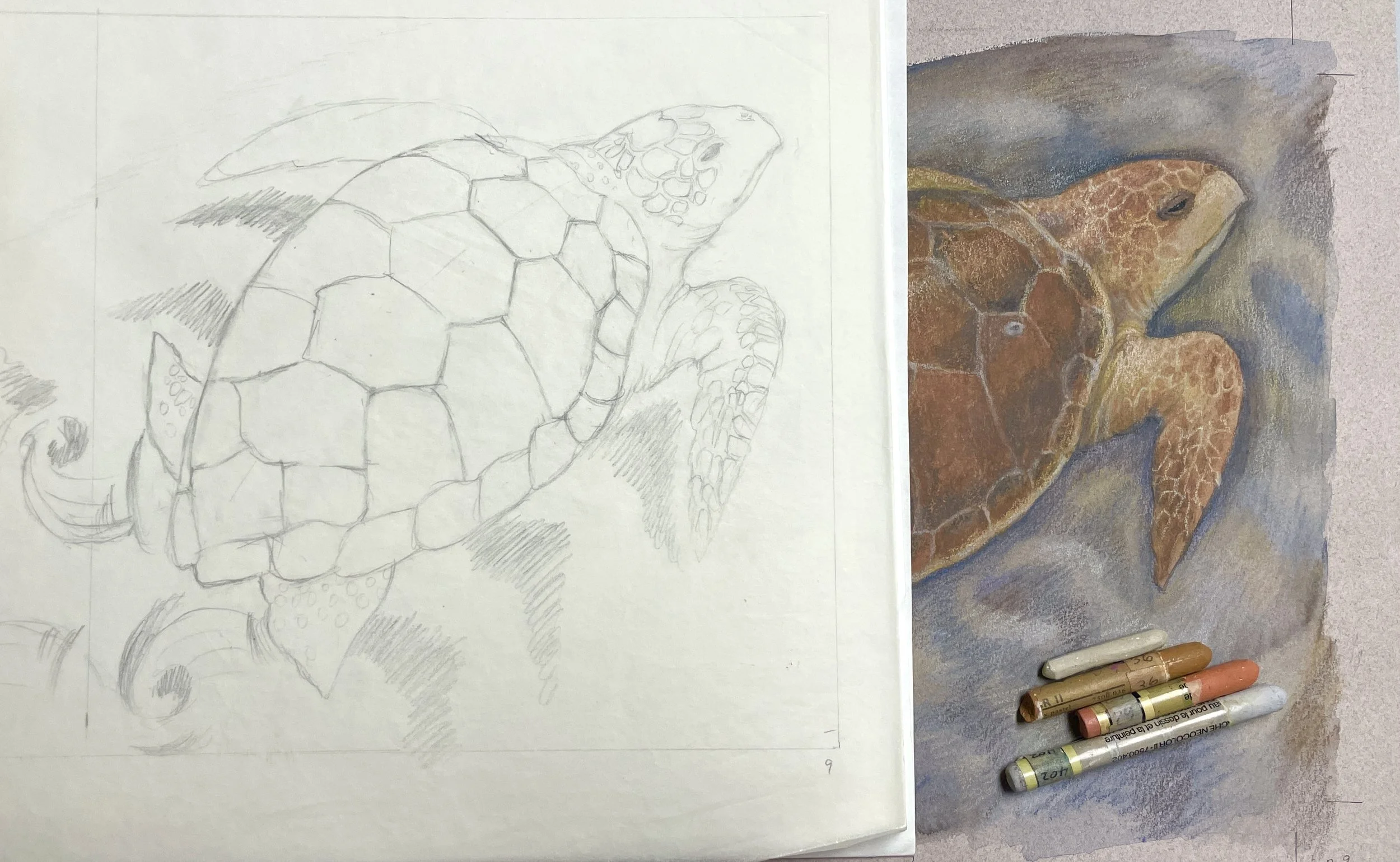
A dummy is a mock-up of the text along with sketches, and is a necessary step in the process of developing a picture book. Once approved by the art director and editor, work began on the final illustrations. Believe it or not, I still have some of the actual Neo 2s used in the turtle artwork. The skinny neutral colored stick is a custom one I made by mixing together bits and pieces from the standard set of pastels.
Choosing the style and colors for illustrations is always a major decision; in this case I opted for a realistic rendering of the animals in their natural habitat using a mostly neutral palette. No cartoonish characters and neon colors for this project, unlike many of my other books ; )
The Mi-Teintes paper is not that thick so I used small amounts of water to dissolve the Neo 2s into washes on the initial layers. The paper rippled some but it didn’t become an issue. Because Neo 2s are opaque, more color can be added on top to blend with or cover lower layers. Another option is to spritz a little water on a tissue, dab the offending area, and remove unwanted color that way; it can’t be removed entirely on an absorbent paper surface, generally speaking.
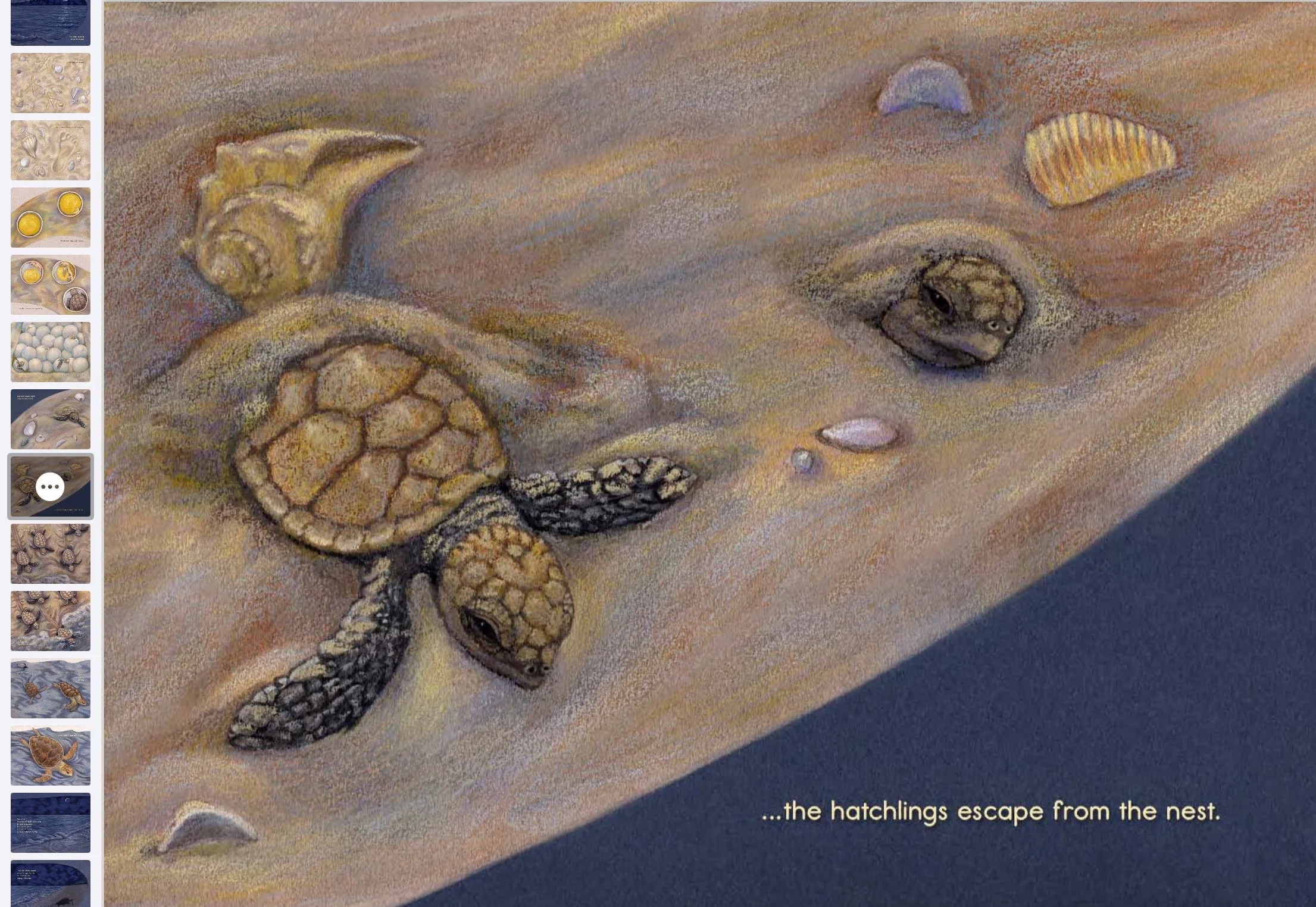
During the quiet night,
while the air is cool, the hatchlings escape from the nest.
Tracks in the Sand was critically acclaimed when it was published by Doubleday in 1993, and was named an Outstanding Science Trade Book by the National Science Teachers Association. After a few years it went out of print as most books do. It still can be found in libraries and occasionally in used bookstores. A few years ago, I decided to release an ebook edition of Tracks. It has been completely reformatted to fit on a tablet and packaged with classroom activities related to the life cycle of sea turtles. For kids who love science and nature, it’s a fun way to learn about these reptiles that lived when dinosaurs still roamed the planet.